


 Melissa Duncan, VP of People

Job descriptions sit at the center of nearly every people process: hiring, compensation, performance management, and career development. But a surprisingly common question still comes up in HR and legal discussions:
“Are job descriptions confidential?”
Short answer: Usually not.
While some elements of job information may require restricted access, job descriptions themselves are rarely private documents.
But the bigger issue for HR leaders is control, not secrecy.
In enterprise organizations, job information often exists across HRIS platforms, recruiting tools, spreadsheets, and shared drives. Without governance, the same role can exist in multiple versions across the HR stack, creating risk that goes far beyond confidentiality.
Why Job Descriptions Usually Aren’t Confidential
In most organizations, job descriptions are designed to be shared, not hidden.
They serve multiple internal purposes across the employee lifecycle:
- Recruiting: Job postings often derive from job descriptions
- Employee clarity: Defining responsibilities and expectations
- Performance management: Providing benchmarks for evaluation
- Workforce planning: Defining roles within job architecture
Because of these uses, job descriptions typically circulate across multiple stakeholders (including HR, hiring managers, and employees).
And as you know, job descriptions are also frequently published externally. When a company posts an open role, it usually includes:
- Responsibilities
- Qualifications
- Reporting structure
- Skills requirements
When Parts of a Job Description May Be Confidential
While the job description itself is rarely confidential, specific information associated with the role may be restricted.
Common examples include:
Compensation Information
Salary bands, bonuses, and internal pay ranges are often treated as controlled information.
However, pay transparency laws across the United States increasingly require employers to publish salary ranges in job postings and maintain documentation supporting those ranges.
That means compensation decisions must be defensible and backed by documented job expectations and leveling criteria.
Proprietary Responsibilities
In highly specialized roles—especially in technology, research, or national security—specific duties may contain proprietary information.
In those cases, organizations may maintain two versions of a role:
- a generalized external version for recruiting
- a more detailed internal version
Sensitive Operational Details
Certain responsibilities may reference:
- security procedures
- internal systems
- regulated operations
These elements require limited access depending on the industry. But even in these scenarios, the majority of the job description remains shareable.
The Real Problem Isn’t Confidentiality. It’s Job Data Sprawl
Concerns about job description confidentiality often stem from a deeper issue: Organizations don’t always have clear control over their job information.
That’s because it’s usually scattered across multiple systems, such as:
- HRIS platforms
- applicant tracking systems (ATS)
- compensation tools
- shared drives
- spreadsheets
- emails
- meeting notes
- chats
In other words, finding something can be like looking for a needle in a haystack.
What’s worse, if you don’t have a system of entry that syncs with the rest of your HR tech stack, you’ll also have different versions of the same job.
Now what should be an easy task – updating a role’s requirements and skills – feels like a monumental effort. It’s therefore easy to fall into the trap of thinking a job description is “good enough,” favoring speed over accuracy.
But as Dr. Neil Morelli, an industrial-organizational psychologist, warns, “It might be easier to dust off an old job description for a similar role in the interest of time, but not attracting the right talent, or setting the wrong expectations, can have detrimental long-term impacts.”
Below are four downstream impacts I’ve witnessed from poorly managed job descriptions, matched with solutions to help you mitigate these issues.
1. Hiring Risk: Mismatched Hires and Higher Turnover
The first place job data fragmentation shows up is in hiring outcomes.
When job descriptions are inconsistent, outdated, or ambiguous, candidates may accept roles that don’t accurately reflect the work they’ll perform. This mismatch between expectations and reality often leads to poor job fit.
For talent acquisition teams, unclear job definitions make it harder to attract the right candidates, align role expectations, and evaluate applicants consistently.
Needless to say, when expectations break down during hiring, the consequences can be costly.
- 80% of employee turnover is linked to bad hiring decisions.
- A bad hire can cost up to five times the employee’s annual salary.
- The annual turnover rate of corporate leaders has increased to 18%, highlighting how costly poor hiring decisions can be at the highest levels of an organization.
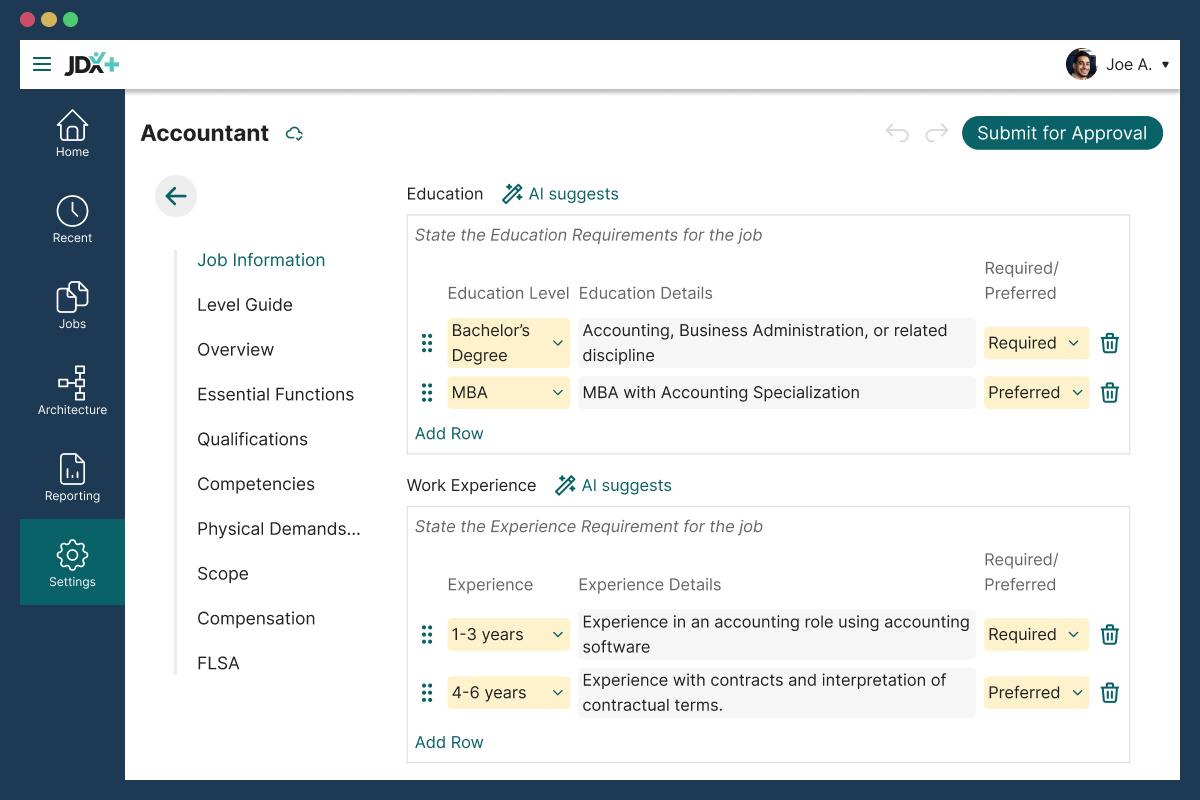
The Fix: Build Consistency with Structured Job Templates
JDX+ provides AI-ready job templates with standardized structure and context, helping you draft, update, and govern job content with confidence.
With structured templates, organizations can ensure job descriptions remain:
- consistent across teams and systems
- aligned with job architecture and compensation frameworks
- ready to distribute to recruiting, HRIS, and compensation platforms
2. Operational Friction: Slower Hiring and Approval Cycles
Job data fragmentation also slows down the hiring process itself.
Recruiters and hiring managers often spend valuable time searching for the latest version of a role—or rewriting job descriptions from scratch—before they can even open a requisition.
When job descriptions aren’t centralized or governed, teams frequently need to recreate job content before you launch the hiring process.
As a result:
- Hiring approvals take longer
- HR teams repeat work
- Recruiting teams lose momentum
Over time, this administrative overhead adds significant friction to hiring and workforce planning, not to mention slows down time-to-open and time-to-fill metrics.
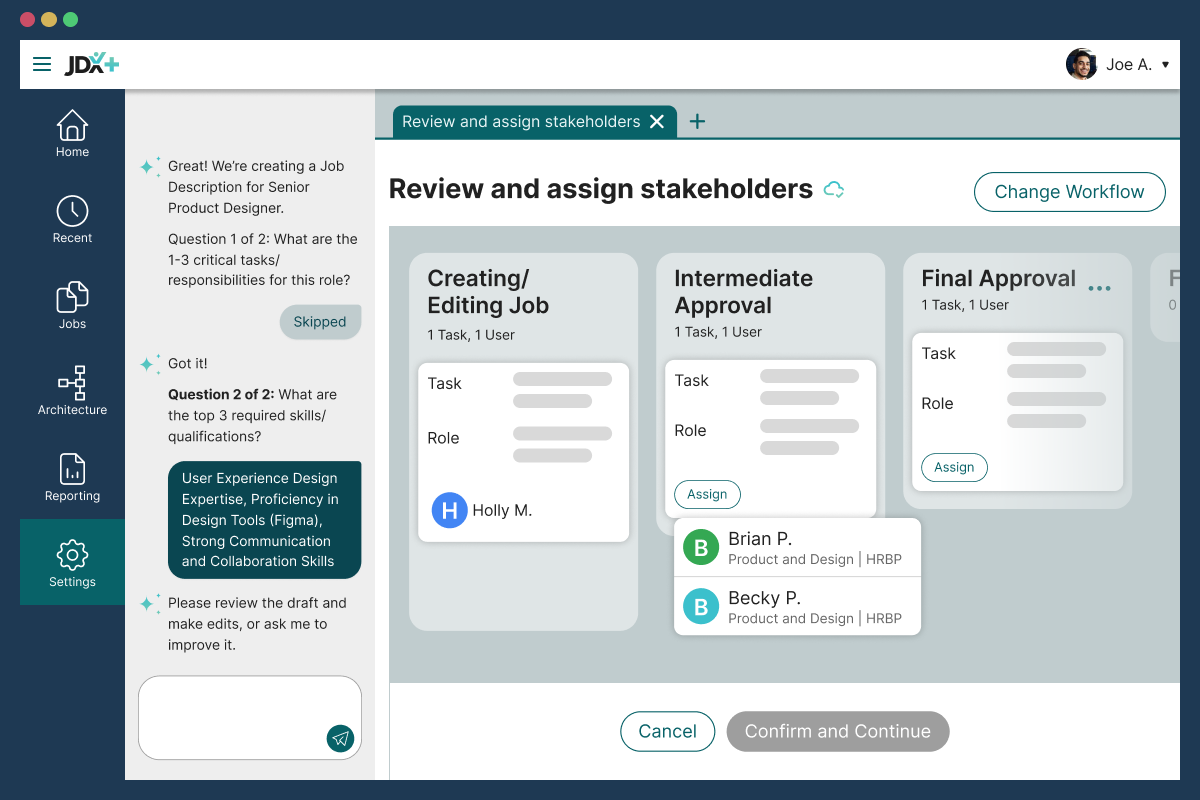
The Fix: Automate Job Workflows and Approvals
Create predictable, policy-driven workflows with JDX+ so the right people review and approve job content in a timely manner.
With structured workflows, organizations can ensure job descriptions are:
- reviewed by the correct stakeholders
- approved according to policy
- ready for recruiters when a requisition opens
3. Workforce Impact: Unconscious and Implicit Bias
Poorly structured job descriptions can unintentionally introduce bias into hiring and promotion decisions.
When responsibilities and qualifications are loosely defined, hiring managers may rely more heavily on subjective judgment rather than consistent criteria.
Without standardized role definitions, you risk reinforcing bias in areas such as:
- candidate evaluation
- promotion decisions
- compensation alignment
Structured job descriptions—with standardized responsibilities, skills, and qualifications—help organizations create more consistent hiring processes and reduce reliance on subjective decision-making.
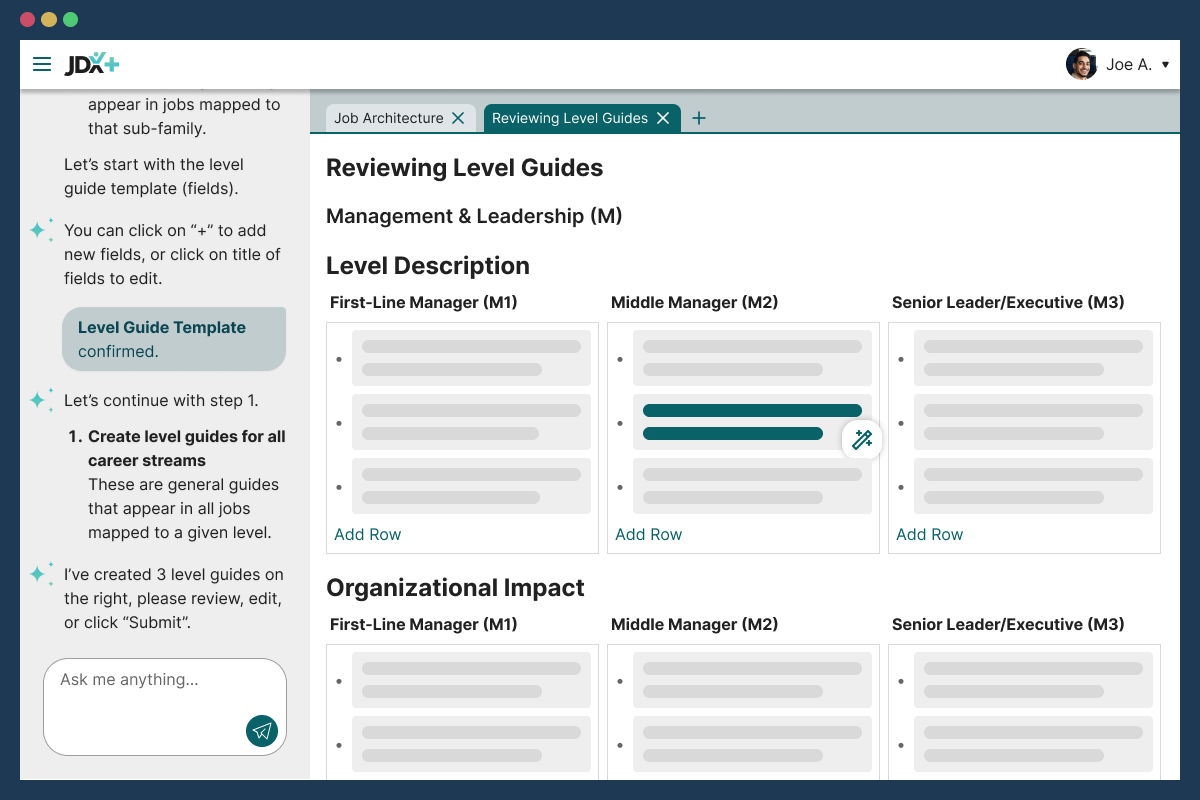
The Fix: Standardize Roles with Structured Job Content
JDX+ helps organizations standardize job definitions using structured job templates and its Job Architecture Builder.
With consistent job content, HR teams can ensure roles are:
- clearly defined across departments
- aligned with job families and levels
- supported by standardized skills and responsibilities
This structure allows you to create more consistent hiring practices and reduce reliance on subjective decision-making.
4. Compliance Risk: Pay Equity and Regulatory Exposure
Pay transparency laws require organizations to demonstrate that compensation decisions are based on clearly documented job responsibilities and consistent job leveling criteria.
When multiple versions of a role exist across systems, you lose the ability to clearly justify why employees performing similar work receive different compensation. It's a reminder that job descriptions can become legally significant, not just administrative.
Job descriptions are also frequently used to demonstrate compliance with employment regulations such as:
- the Fair Labor Standards Act (FLSA)
- the Americans with Disabilities Act (ADA)
- Equal Employment Opportunity Commission (EEOC) guidelines
Without consistent job documentation, organizations lose the ability to clearly show:
- how roles were defined
- when responsibilities changed
- who approved those changes
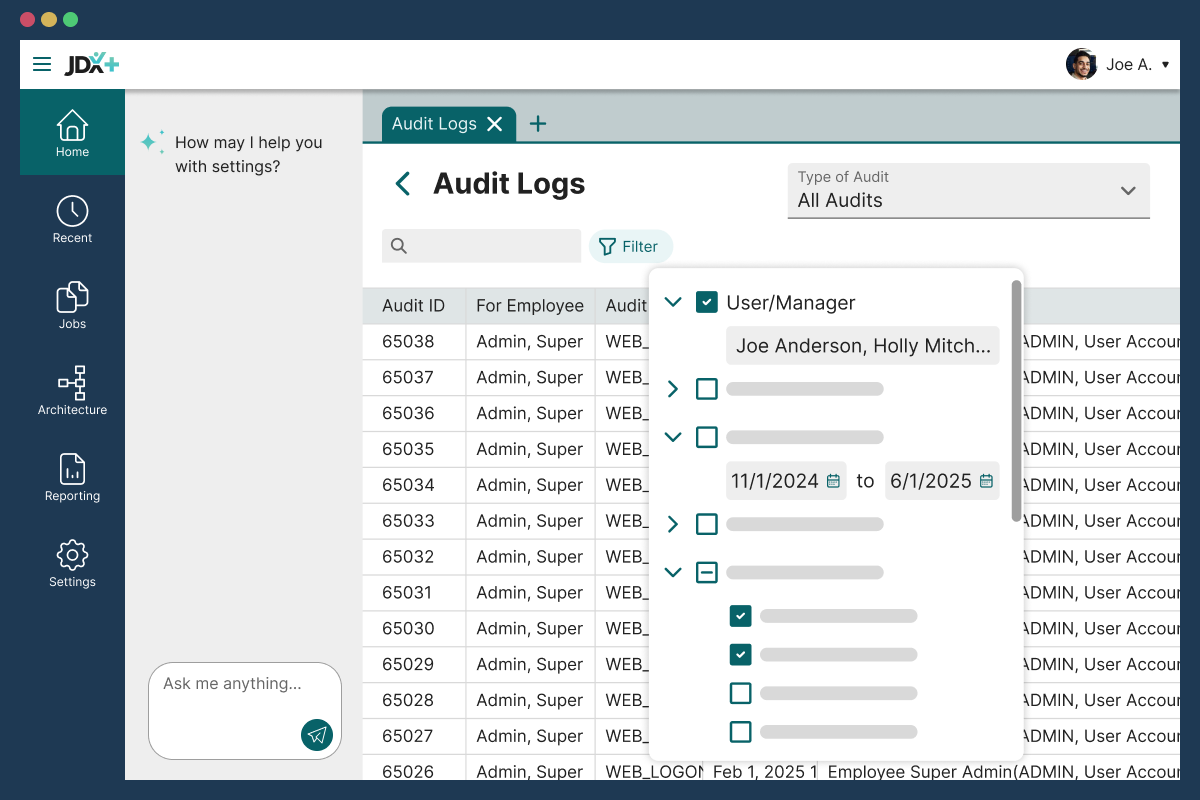
The Fix: Maintain Audit-Ready Job Documentation
JDX+’s analytics helps HR teams turn governed job data into reports, dashboards, and widgets that support compliance and compensation reviews.
Instead of relying on manual spreadsheets, teams can quickly answer questions about job definitions, approvals, and changes across the job library.
With built-in analytics, organizations can:
- generate compliance-ready reports
- track job description changes with audit trails
- monitor job data health through shared dashboards
- control access to sensitive information with role-based permissions
Balancing Transparency and Control
The risks created by fragmented job data—from hiring mistakes to compliance exposure—ultimately point to a larger challenge for HR leaders: balancing transparency with control.
HR leaders today are navigating two opposing forces.
More Transparency
Organizations are under increasing pressure to make job and compensation information more visible to employees and candidates. Initiatives driving this shift include:
- pay transparency laws
- internal mobility programs
- career path visibility
More Compliance Pressure
At the same time, HR and Total Rewards teams must maintain tighter oversight of job data to support regulatory compliance and defensible compensation practices. This includes:
- compensation audits
- pay equity reviews
- documentation requirements
Supporting both transparency and compliance requires governed job data.
HR leaders increasingly need to answer questions like:
- Who approved this job description?
- When was it last updated?
- Which version supports the posted salary range?
- Which systems are using this data today?
Without structured governance, those answers are often difficult—if not impossible—to find.
For HR leaders, the real challenge isn’t deciding whether job descriptions should be confidential. It’s instead ensuring that the job information behind them is accurate, consistent, and controlled across systems.
