


 Melissa Duncan, VP of People

You roll out new values, update your employer brand, and even refresh the team's photo. On paper, the culture looks clear and intentional.
But inside your organization, there’s confusion about roles, inconsistent leveling, and ongoing debates about scope and pay. Employees are quietly comparing titles across teams and wondering how decisions are made.
Sound familiar?
Here’s the disconnect: Culture doesn’t live in statements. It shows up in systems.
And while there are numerous processes to tackle if you want a positive, unbiased workplace, one of the most overlooked systems shaping your culture is job descriptions.
Why Job Descriptions Matter for Company Culture (Not Just Compliance)
Compliance issues surface in how people experience your organization, often long before they become legal problems.
When job descriptions are inconsistent, outdated, or disconnected from reality, the impact spreads quickly and looks like:
- Hiring expectations not matching the actual role
- Pay decisions feeling arbitrary
- Career paths becoming unclear
Over time, these issues compound into something bigger: an erosion of trust.
Job descriptions deserve a broader lens because they not only support compliance, but also influence how you standardize clarity, build trust, and drive engagement across your organization.
Job Descriptions Define How Work Actually Gets Done
According to research by Effectory, only 53% of employees experience high role clarity. That’s a miss for HR teams, since it’s one of the most practical drivers of performance, engagement, and ultimately, culture.
When people understand what’s expected—and how their role connects to others—they operate with more confidence and less friction. As a result, decisions move faster, accountability is clear, and teams trust that work is structured intentionally.
That consistency reinforces a culture of ownership and alignment.
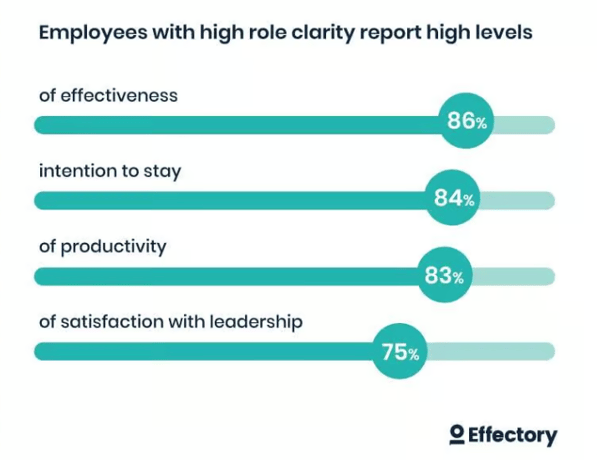
When roles are vague or inconsistent, the opposite happens:
- Work overlaps or falls through the cracks
- Teams negotiate responsibilities in real time
- Decision-making slows down
Over time, vague job descriptions create inefficiencies and shape behavior. People start protecting scope, escalating more decisions, or working around unclear ownership. What looks like a “culture issue” is often a role clarity issue in disguise.
Action Item
Review your job descriptions and ensure they clearly define:
- Who owns decisions
- How responsibilities are divided
- Where accountability starts and stops
When job definitions are clear, culture becomes more predictable and a lot more scalable.
Job Descriptions are Trust Signals
Candidates and employees read job descriptions as signals about your organizational culture, whether you intend them to or not.
They’re asking:
- Is this company clear about how work is defined?
- Are expectations consistent across teams?
- Does compensation align with scope?
When job descriptions are structured, transparent, and aligned, they signal intention and discipline. When they vary wildly by manager or department, they signal something else entirely – discretion, inconsistency, and a lack of shared standards.
According to HBR research, leaders consistently point to the same organizational warning signs:
- Strategy unable to be articulated
- Lack of clarity about job responsibilities
- Shifting or unclear expectations
- Inconsistency in messaging
Those issues show up directly in how jobs are defined and how consistently the definitions are applied. If inconsistency is rampant throughout your job descriptions, employees stop trusting the system and your culture shifts from structured to subjective.
Action Item
Treat job descriptions as cultural infrastructure. Review and strengthen them with a focus on consistency across the organization:
- Compare similar roles across teams for title and scope alignment
- Identify visible inconsistencies employees would notice
- Ensure job postings reflect actual responsibilities
- Flag roles where scope and level feel misaligned
When job definitions operate consistently, trust builds. When they vary, culture follows the variation.
Perceived Fairness Drives Engagement and Retention
If job descriptions signal how decisions are made, fairness determines whether those decisions feel credible.
Most organizations believe they operate fairly, but employees judge fairness based on consistency.
Gallup research shows that clarity and fairness in the workplace drive engagement, performance, and retention. When employees understand how decisions are made—and see those decisions applied consistently—they invest more in their work and in the organization.
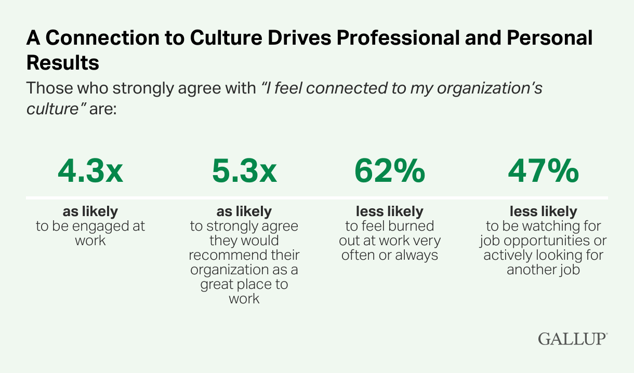
Job definitions play a central role in shaping that experience.
When roles are clearly defined and consistently applied, employees understand what their role requires, how they’re evaluated, and the skills necessary to grow.
That clarity supports a culture of fairness and forward momentum.
When job definitions are fuzzy or inconsistently applied, a different pattern emerges:
- Resentment: “Why does it feel like that team is overstepping?”
- Mobility friction: “I don’t know what I need to do to move up.”
- Disengagement: “It feels meaningless.”
This is where culture starts to shift in a revealing way. When job definitions lack governance, decisions move from structured to a judgement call.
At that point, employees stop seeing the system as predictable and start asking:
- Why is that role leveled higher than mine?
- How did that team define their scope differently?
- What do I need to do to move up?
Over time, this creates a manager-dependent environment that may feel political, even when the intent is fairness.
Action Item
Strengthen perceived fairness by making growth and expectations explicit:
- Define and document leveling criteria across roles
- Clarify what performance looks like at each level
- Outline what is required to move to the next level
- Audit similar roles across teams for consistency
When employees understand how progression works, fairness becomes visible in day-to-day decisions.
At Scale, Culture Becomes a Systems Problem
In enterprise organizations, job definitions evolve constantly, but rarely in a coordinated way.
In many cases, legacy job descriptions often sit alongside newer, more structured roles, leading to title drift and uneven scope. And oftentimes, roles with the same name represent entirely different levels of responsibility depending on where they exist within the organization, making it difficult to interpret how work is structured.
Mergers and acquisitions add another layer of complexity. Each organization brings its own approach to job architecture, including differences in:
- leveling frameworks
- scope definitions
- compensation alignment
When those differences remain unresolved, the organization continues operating with multiple sets of assumptions about how roles should function.
Employees experience that fragmentation directly:
- Roles that appear equivalent on paper carry different expectations in practice
- Career paths become harder to navigate across legacy boundaries
- Decisions about pay or leveling feel inconsistent depending on where someone sits in the organization
This is where culture begins to fracture at scale.
Culture reflects how consistently systems operate across the enterprise, and job definitions play a central role in that consistency. When they aren't standardized, governed, and continuously maintained, inconsistency becomes embedded in how the organization functions. Once that happens, fairness, clarity, and alignment become much harder to sustain.
Action Item
Treat job architecture as a living, enterprise-wide system that requires ongoing alignment:
- Audit legacy job descriptions against current standards and identify areas of misalignment
- Establish a single source of truth for job definitions across systems
- Create a structured process to reconcile roles following mergers and acquisitions
- Maintain ongoing review cycles to prevent drift over time
Sustained alignment requires deliberate structure and consistent governance to ensure that job definitions evolve together rather than drift apart.
What HR Leaders Should Do Next
Most organizations treat job descriptions as static documents. That approach breaks down quickly at scale.
To make job descriptions work as cultural infrastructure, you must shift from documentation to systems.
That means:
- Moving from one-time updates to continuous governance
- Treating job architecture as shared infrastructure across HR, Finance, and Talent
- Ensuring job data connects directly to compensation, mobility, and workforce planning systems
This is where job description management evolves into job data governance.
When job data is structured, versioned, and consistently applied, culture becomes something you can design—not something you react to.
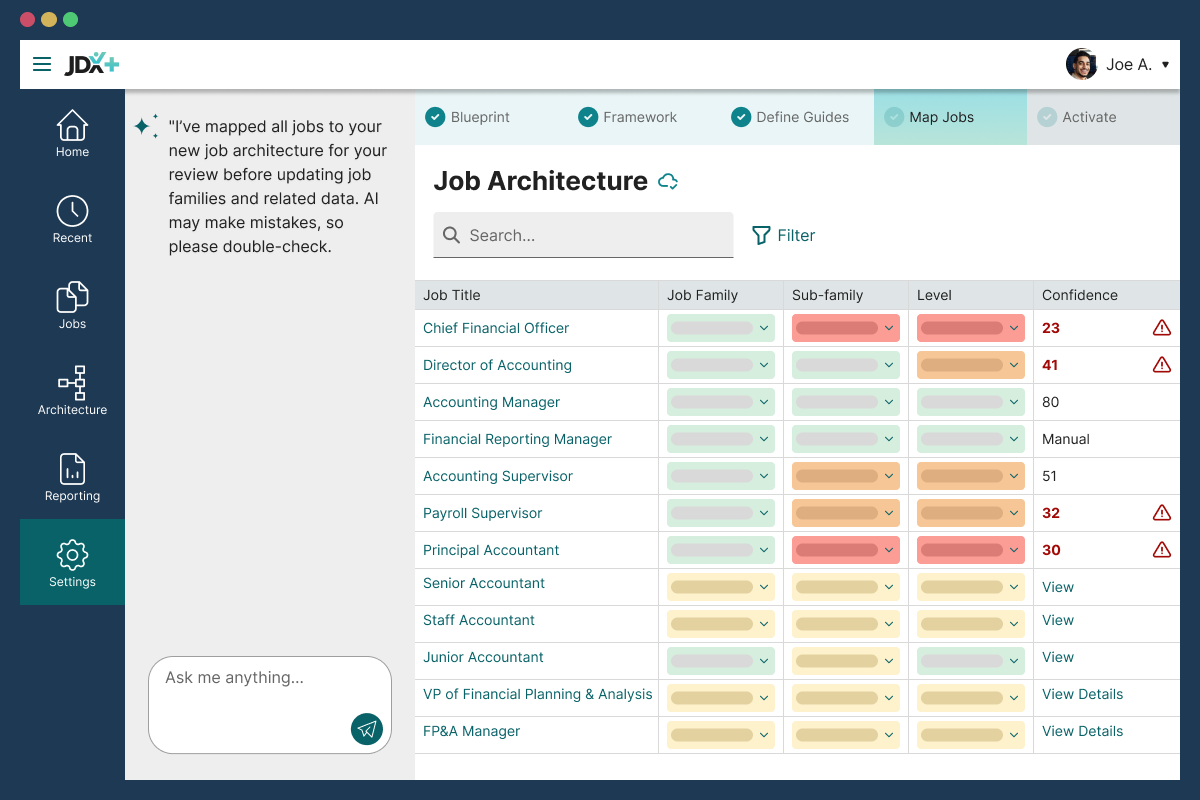
Align titles, families, sub-families, and levels across your organization within JDX+, the system of entry for your job information.
The Bottom Line
Job descriptions influence how work gets done, how decisions are made, and how fair the organization feels to the people inside it.
When job definitions are clear, consistent, and governed, culture becomes more predictable and trustworthy.
When they aren’t, employees fill in the gaps, and those gaps rarely lead to positive assumptions.
For HR leaders, this is an opportunity. By bringing structure and governance to job data, you’re reinforcing the foundation your culture operates on.