


 Justin Raniszeski, CEO

You already know the problem. The hard part is getting the internal “yes.”
If you're reading this, you probably don't need convincing that managing job descriptions in Word documents and shared drives has become a liability. You live with the consequences.
The harder challenge is explaining why fixing it deserves investment now, especially to a CFO, CHRO, IT leader, or procurement team that may see job descriptions as documents rather than enterprise data.
That's the business case for JDXpert.
The Hidden Cost of Manually Managing Jobs
When job descriptions live in Word or across emails, no one can reliably answer a simple question: Where is the current, approved version of any given role?
The same job drifts into multiple versions. Compensation, recruiting, and compliance all build on data that is already stale. (We've made the fuller case for what job descriptions are actually used for and why job description management must be reframed elsewhere.)
The problem is widespread; only 50.2% of HR leaders said they were highly confident in the accuracy of their job and skills data.
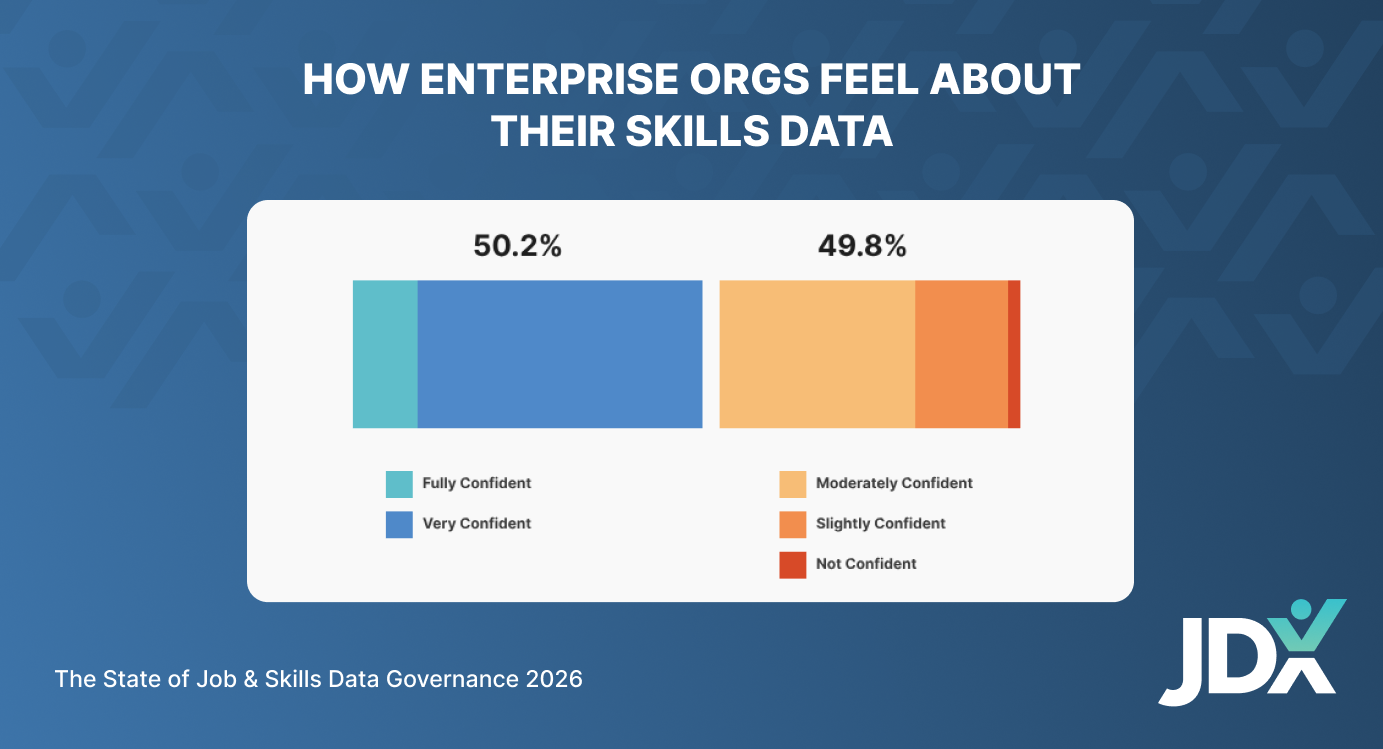
That hesitancy usually surfaces as an uncomfortable scenario. If an auditor asked to see the CFO's job description, could you produce the current, approved version on the spot? When the answer is “search a few drives and hope,” that exposure is exactly what your business case exists to close.
Why “We'll Just Clean It Up” Doesn’t Work
The common response is to launch a cleanup project: collect every job description, de-duplicate, standardize, build a job architecture and align roles to job families.
And for a while, it works. Then the organization changes and, eventually, the HR team finds itself running another cleanup project.
The issue isn't the quality of the cleanup, but rather that a project can’t solve an ongoing governance problem.
Coverage isn’t control.
Having a job description for every role does not mean those descriptions are current, consistent, approved, integrated, or governed.
That gap is exactly what JDXpert’s 2026 State of Job & Skills Data Governance report found.
In a survey of 227 senior HR leaders, the organizations with the highest job- and skills-data coverage were the most dissatisfied: 92.6% expected to improve their governance, and among those high-coverage organizations:
- 61% still lacked synced systems
- 47% lacked version history
- 44% lacked approval workflows
Coverage gets you the data; governance gets you the return.
The Recommendation: Create a Governed System of Entry for Job Information
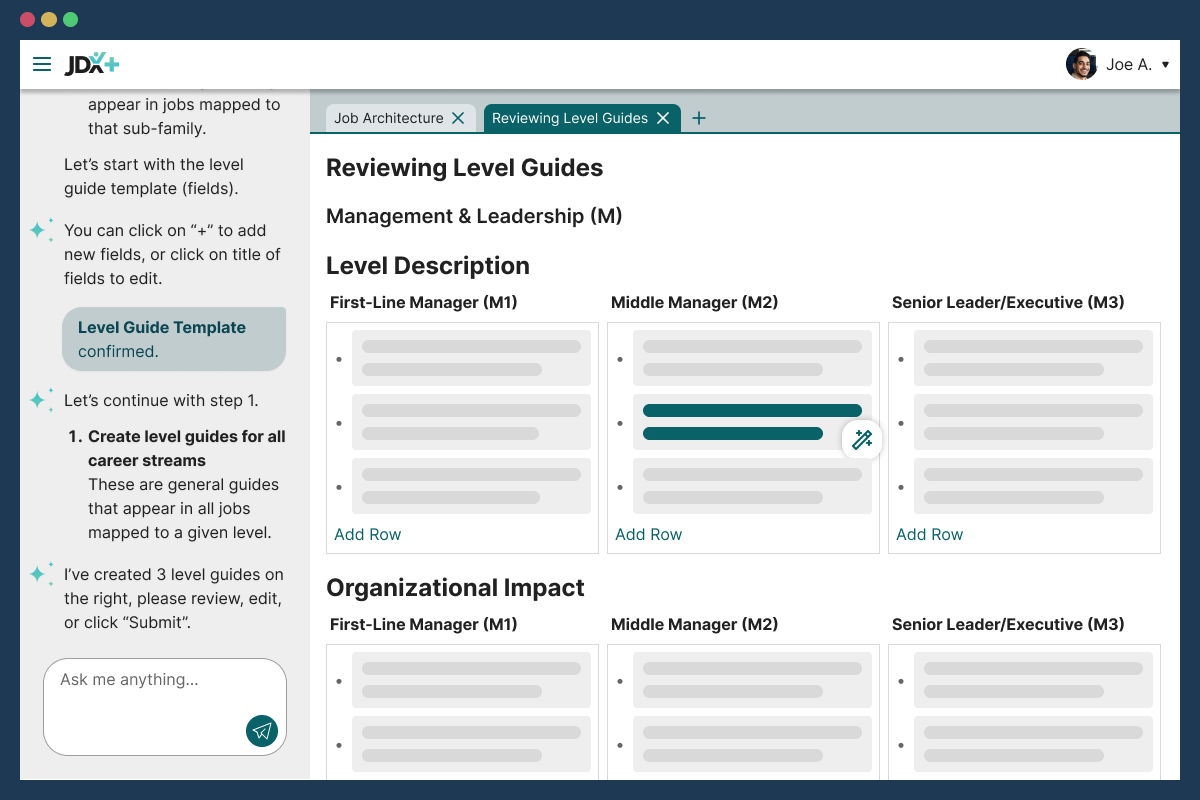
JDXpert is a Job Information Management Platform, the governed system of entry for job information. The distinction matters.
JDXpert doesn't replace your HRIS; it feeds it. Workday, Oracle, or UKG stay your system of record for people data. JDXpert becomes the trusted source for the job data underneath it: one approved version per job, with full history, structured fields, and an approval trail.
That distinction defuses the first objection you'll hear: “We already have an HRIS.” Nothing gets displaced. Each downstream system simply gets better inputs.
JDXpert is used by 95+ Fortune 500 companies and 450+ enterprises, from hospital systems and banks to universities and manufacturers, for exactly this problem.
Why This Budget Cycle
There's a second objection worth pre-empting: We're funding AI this year, not documentation. That line of thinking gets the sequence backwards.
AI applied to fragmented job data returns fragmented answers faster — and 76% of HR leaders say AI is already pushing them to reevaluate their job data and governance. But AI only amplifies whatever quality the underlying data already has, and returns fragmented answers faster, not better ones. Governed job information is what makes job data an asset instead of a risk.
Governed job information isn't a competing line item; it's a dependency your AI roadmap already has. (We've made that case in full in Why AI Breaks Without Governed Job Data.)
What It's Worth
The cost of poor job information goes well beyond the time HR spends managing documents. It can affect what it costs to hire, how long positions remain open, whether the right people are hired, and whether they are paid appropriately.
For most organizations, the business case falls into four areas:
- Administrative waste. Creating a new job description often means finding an old document, rewriting it, circulating it for review, reconciling edits, and chasing approvals. Multiply those hours across hundreds or thousands of hires and job changes each year, and the cost adds up quickly. JDXpert reduces that effort through structured templates, reusable content, automated workflows, and a single governed source for job information.
- First-year turnover and bad hires. Recruiting starts with defining the job. When responsibilities, requirements, skills, and expectations aren't accurate or clearly defined, organizations increase the risk of hiring someone who isn't well matched to the role. The cost isn't simply another recruiting fee. A bad hire can mean lost productivity, disruption to the team, replacement costs, and another period with the position vacant.
- Time to fill. Recruiting shouldn't begin with HR and the hiring manager trying to determine what the job actually is. Current, approved job information allows recruiting teams to start with a clearly defined role rather than spending valuable time locating, rewriting, and approving job descriptions. At scale, even small reductions in vacancy time can translate into meaningful economic value.
- Compensation mispricing. You can't accurately price a job you haven't accurately defined. When responsibilities, requirements, levels, and skills are inconsistent or outdated, compensation teams are forced to make decisions using imperfect information. That increases the risk of overpaying, underpaying, or incorrectly leveling a role. Governed job information provides a stronger foundation for market matching and compensation decisions. Only 23% of organizations measure it even quarterly, so when a review does come, documented and governed job data is the difference between a defensible decision and a guess.
These costs compound. Poor job information consumes administrative time, contributes to bad hires and first-year turnover, can extend vacancies, and increases the risk of compensation mispricing.
Based on JDXpert’s Cost of Inaction model, these inefficiencies can cost an organization approximately $1,150 per employee, per year. For a 10,000-employee organization, that represents more than $11 million in potential annual impact.
That changes the conversation. Job information isn't simply an HR documentation issue. It is an enterprise data problem with a measurable financial cost.
JDXpert addresses that cost by creating a governed foundation for job information, improving the quality and efficiency of the decisions and processes that depend on it.
What You Actually Get
JDXpert delivers that return through a set of capabilities that work together.
Here's what you get:
- One governed source of truth. Every job has a single approved version and a full history of what it said and when it changed.
- Authoring with a shared content library. Write once and reuse standard language instead of rebuilding each description from a copied file. (Job templates)
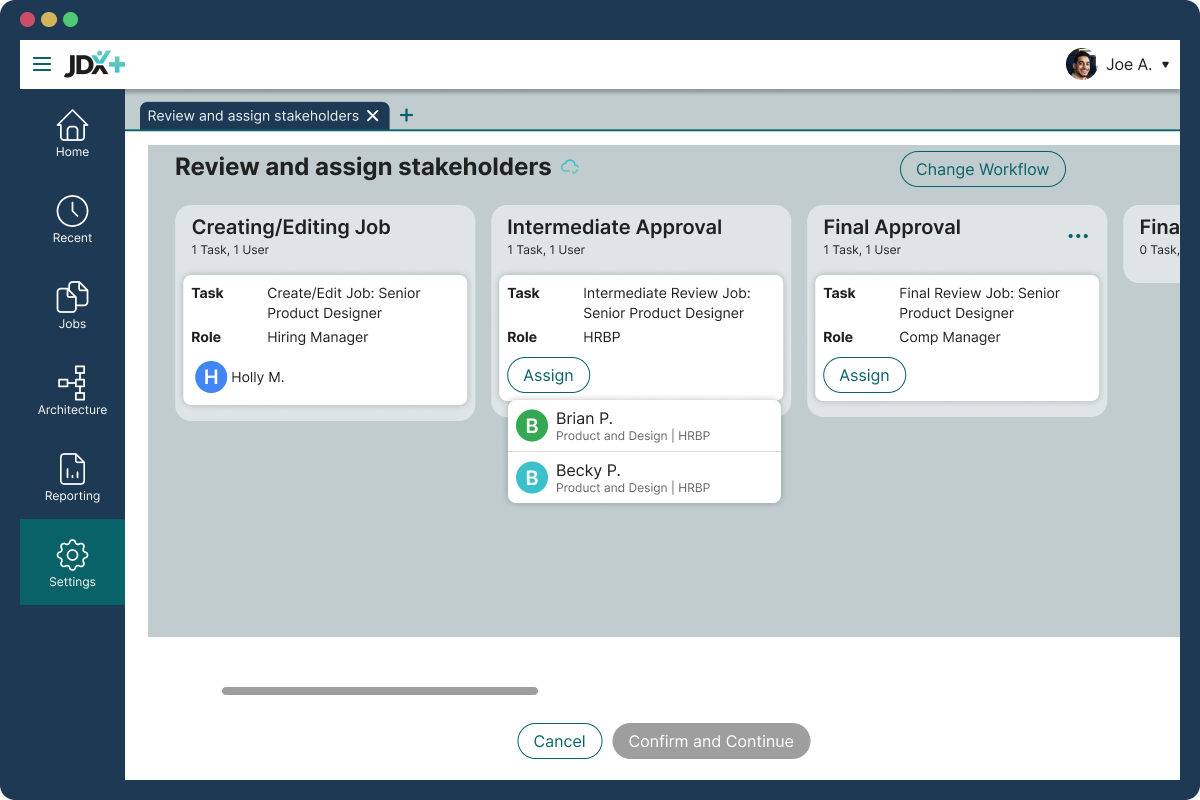
- Approval workflow with an audit trail. Changes route to the right approvers, and every change is logged at the field level. (Workflows and approvals)
- Structured job data. Requirements, licenses, physical demands, and FLSA status live in fields you can query, not paragraphs someone must read.
- Integration with the systems you already run. Governed job data flows into HRIS, ATS, compensation, and learning systems.
- Reporting on job information. Questions like “which jobs require this credential?” or “which are out of date?” become reports, not research projects. (Analytics)
What Changes After
The strongest part of any business case is what peers experience on the other side of implementation.
“Before JDX, we had over 6,000 job descriptions with multiple versions. Now we have the confidence of knowing the best version of a job description is the version we're working in, and the stakeholders who need access have it when they need it.”
— Sr. Manager of Sales Compensation, national environmental services company (~48,000 employees)
The pattern repeats across our customer stories: out of Word and into data, audits answered instead of dreaded, and the HRIS finally fed clean, current job information.
As one customer put it when asked about alternatives at renewal:
“Nobody else does this the way you do. And I don't want to go back to Word docs.”
— HR Specialist, credit union
Make the Case
If the version sprawl, the audit exposure, and the stale downstream data sound like your organization, the cost of doing nothing is already on your books. It's just spread across every team that touches job data, where no one owns the total.
See how JDXpert compares, explore JDX+, and book a discovery call to put real numbers against your own headcount.